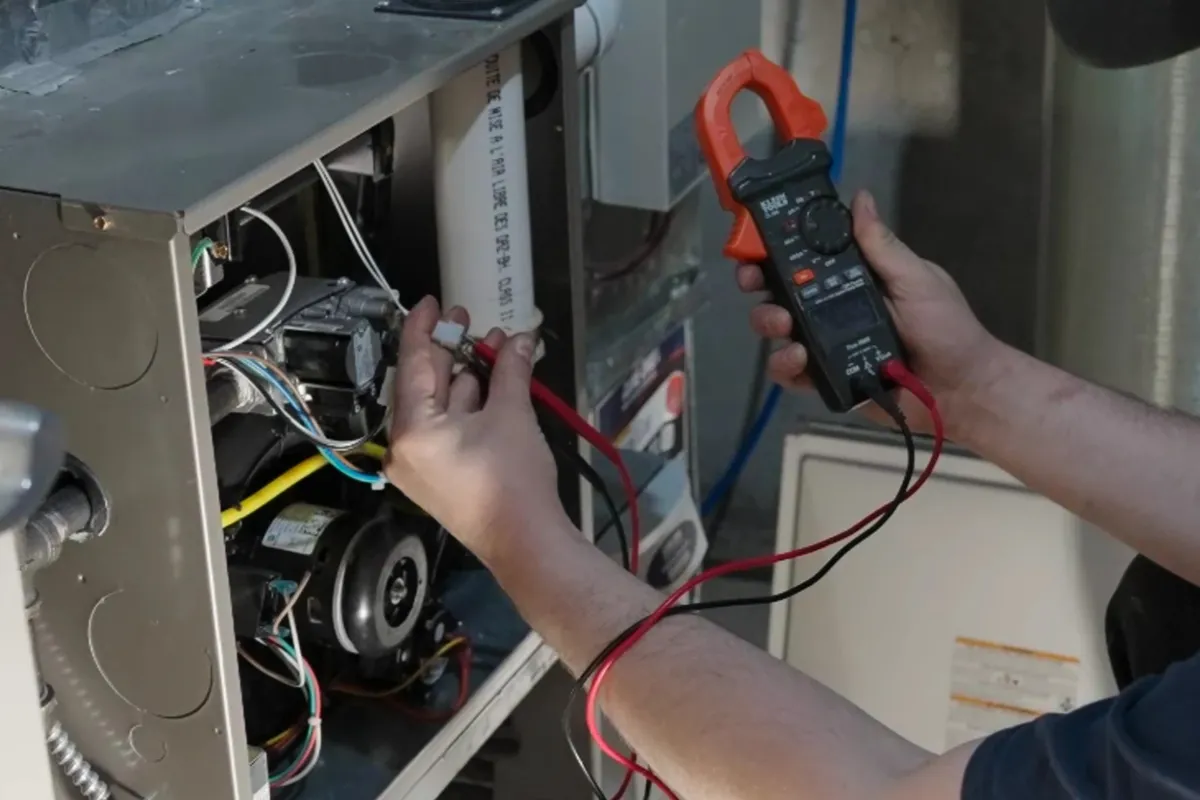
Request furnace repair for a property in Richmond Hill. Include the equipment, the problem or planned work, and your location so the request can be reviewed.
Does the furnace fail to start, stop before reaching the set temperature, or make a new noise?
A furnace that will not start, cycles frequently, makes an unfamiliar sound, or heats unevenly needs diagnosis based on its symptoms and equipment type. A service request can describe when the problem occurs, what the thermostat displays, and whether the furnace is gas-fired or uses another fuel. Those details help distinguish an ignition or fuel-delivery fault from an airflow restriction or limit-control issue. Repair, maintenance, and replacement are separate decisions; inspection findings and the furnace’s condition help determine which is appropriate.
Diagnosis can include reviewing the furnace’s fault indication and operating history, then checking relevant ignition, fuel, airflow, and control components. A short cycle may have a different cause than a burner that will not light. Age, repair records, parts availability, and the condition of the heat exchanger and venting can also change whether repair or replacement merits consideration.
Ignition, flame sensing, fuel delivery, and startup faults.
Airflow, short cycling, limit controls, and unusual furnace noise.
Repair-versus-replacement decisions and inspection-based maintenance.
Assessment and Scope
Questions for the Proposed Work
01
Separate ignition faults from airflow and control problems
A furnace that does not light may have an ignition, flame-sensing, fuel-supply, or control fault; a furnace that starts and stops may instead be responding to restricted airflow or a limit control. The sequence of sounds, burner operation, and any displayed fault code are useful observations to report. Internal electrical, combustion, and fuel checks require qualified service rather than occupant troubleshooting.
02
Use inspection findings to choose repair or replacement
A repair decision depends on the confirmed fault, the furnace’s overall condition, and whether suitable parts remain available. A limited ignition repair on an otherwise serviceable unit is different from repeated major failures or evidence of a damaged heat exchanger or venting problem. Comparing repair history and inspection findings helps determine whether repairing the existing furnace remains reasonable or whether replacement should be assessed.
03
Base maintenance on the furnace and its records
Maintenance is distinct from repairing an active failure. The applicable manufacturer instructions and inspection findings guide checks of items such as airflow, burners, ignition, venting, and controls. Keeping service records can help identify recurring faults and clarify changes in operation between visits. A maintenance visit should not be treated as a guarantee against breakdowns or as a substitute for diagnosing a furnace that is already malfunctioning.
Compare the next step
Map the areas served by the furnace and the conditions under which another heat source operates. Ask whether the reported complaint comes from the furnace, a changeover control, or a room outside its distribution. Have the contractor explain the intended sequence so overlapping equipment does not conceal the actual fault.
Leave burner, fuel, venting, electrical, and internal equipment work to a qualified contractor. Do not bypass a safety switch or repeatedly reset a furnace.