
Share the property details
Send the location, equipment, symptoms or planned changes, and who can approve the work. Existing labels and service records help define the request.
Now part of the
 family
Request heating, cooling or maintenance for your Richmond Hill property. Choose the work and describe the equipment or symptoms. Coverage, pricing and appointments require confirmation.
Is something not working, or are you planning an installation or maintenance?
Choose the work you need and describe what changed, when it began, and which equipment is involved. For a planned project, include the outcome you want and any access or scheduling constraints.
View thermostat repair & replacement services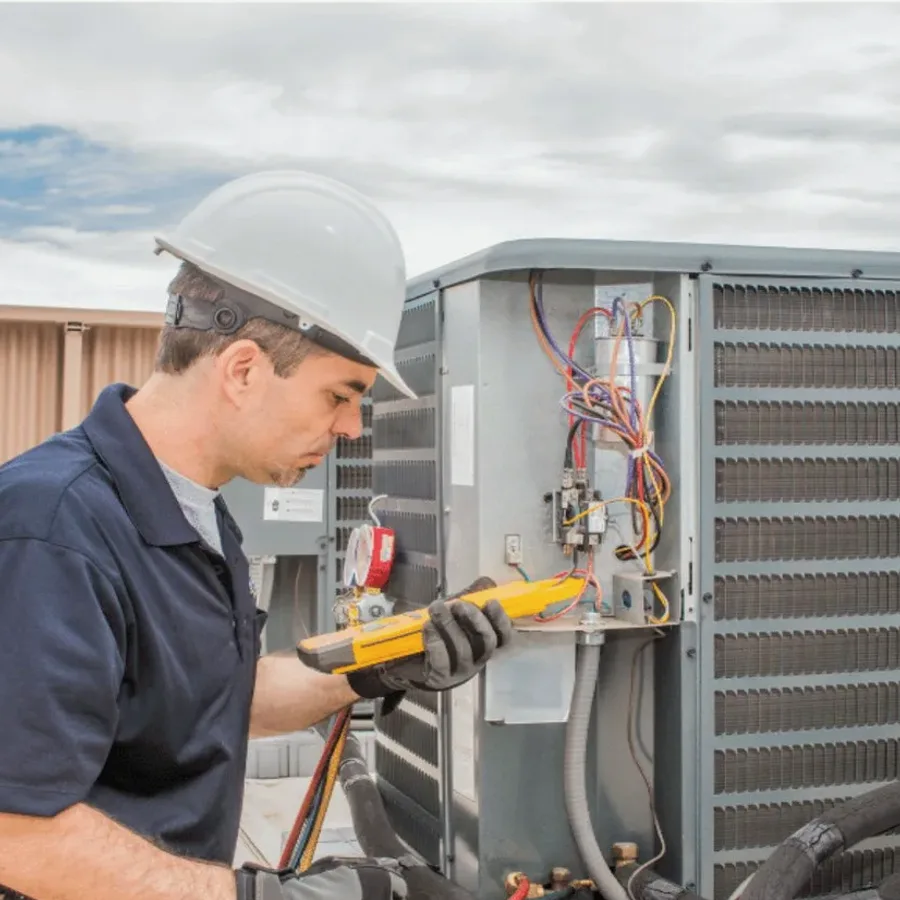
Describe the work first, then confirm the people, timing, and terms before making a commitment.
Send the location, equipment, symptoms or planned changes, and who can approve the work. Existing labels and service records help define the request.
The enquiry team reviews the request and shares it with a relevant service provider for follow-up using your contact details. Confirm contractor coverage, qualifications and how the property will be assessed before agreeing to an appointment.
Ask which findings support the work, what is included or excluded, and how completion will be checked. Agree on pricing and terms with the contractor.
Start with the installed equipment and its manufacturer instructions. Maintenance needs depend on the appliance and its use. Keep service records and ask a qualified contractor which seasonal inspections apply.
When requesting work for a property in Richmond Hill or nearby Markham, Newmarket and Aurora, trace each existing control to its appliance and zone before specifying a replacement. Ask whether a common control is supported or separate devices remain necessary. Define remote access and scheduling for each system, and require a demonstration that the agreed operating modes do not create conflicting commands.
Assessment can check the thermostat’s power source, wiring condition, configuration, temperature reading, and call for heating or cooling against the equipment response. If the system does not respond, the fault may be downstream of the thermostat. Replacement planning also considers heating stages, heat-pump controls, available conductors, and any humidity-control functions so the chosen model supports the actual system.
A blank display can relate to batteries, power supply, wiring, or the connected system, while an inaccurate reading may involve thermostat location or sensing. Short cycling can have causes beyond the thermostat. Testing the control call and the equipment response helps locate the fault rather than replacing a control by assumption. Internal electrical testing and wiring work should be left to qualified service personnel.
Thermostat compatibility depends on the equipment’s control requirements, not just the mounting dimensions. A multi-stage furnace, heat pump, or system with auxiliary heat may require specific terminals and configuration. Some systems also use controls for dehumidification or other functions. Confirming the model numbers, wiring, and equipment sequence before selection helps avoid a replacement that cannot operate the intended stages or features.
A loose or damaged connection, a configuration issue, and a failed thermostat call for different remedies. If the existing thermostat is functional but poorly configured, correction may be more appropriate than replacement. A new programmable or smart model can be considered when the existing control is incompatible, damaged, or no longer meets the system’s control needs. The installation scope should include setup and verification with the connected equipment.
Share the property location and the work you need so the request can be reviewed.
The configured service area includes these communities. Include your property location so coverage and appointment availability can be confirmed.